
About Us
Legal Resources
SSiDisabled.com
a blog about Social Security disability law and rules with information and resources that you can use to help your claim.
Legal, Business & Crime new stories
Google Cloud
Flock and the Florida case
Flock and the Florida case
On August 25, Google Cloud introduced specialized Gemini Enterprise versions for legal work. The legal edition aids with contract review, regulatory checks, brief drafting, and integrates with DocuSign, Thomson Reuters, and tools from partners like Harvey.
Flock and the Florida case
Flock and the Florida case
Flock and the Florida case
Several videos appearing on social media specifically TikTok regarding Flock Safety cameras and the case in Florida where an innocent woman was jailed for 13 days. For those who don't know in April 2026, 23-year-old Lindsey Brooke Isaacs was arrested by the Florida Highway Patrol and charged with eight felonies, including three counts of vehicular homicide, following a tragic hit-and-run. She spent 13 days in jail before being released on bail and eventually cleared of all charges.
Here are the facts:
A Flock Safety camera record placed Isaacs' black Dodge Durango roughly three miles from the crash scene around the time of the accident.
Investigators focused heavily on the camera lead, despite glaring contradictions. A 911 caller had described the suspect vehicle as a maroon Dodge Durango with a completely different partial plate. Furthermore, Isaacs' car had zero physical damage.
In May 2026, prosecutors dropped all charges against Isaacs and arrested the actual suspect (who owned a damaged, maroon Durango). Isaacs has since filed a federal civil rights lawsuit against the Florida Highway Patrol for relying blindly on the technology without verifying basic facts.
Isaacs was charged with eight felonies, including three counts of vehicular homicide and leaving the scene of a fatal accident. In Florida, when a suspect is charged with a capital or life-felony-level offense (leaving a fatal scene carries up to 30 years per count), judges routinely order the suspect held on "no bond" at their initial 24-hour hearing. This means that even with a high-priced lawyer, she could not simply pay to get out until a formal bond reduction hearing could be scheduled weeks later.
The fatal crash happened in October 2025. Police immediately impounded Isaacs' black Durango based on the Flock camera hit, but they did not arrest her because they lacked physical evidence.
For six months, Isaacs was stuck without a vehicle, unable to get to work.
In early April 2026, Isaacs finally filed a civil lawsuit to force the Florida Highway Patrol (FHP) to return her car.
Just days before the civil court hearing regarding her car, the troopers abruptly secured an arrest warrant and forced her to surrender. Isaacs’ federal lawsuit alleges that the troopers rushed the arrest to cover up their botched investigation and avoid losing the civil car-return case.
The reason a judge signed the arrest warrant in the first place is that the two FHP troopers allegedly lied under oath on the warrant affidavit. The lawsuit notes that the troopers claimed Isaacs' Durango had "damage consistent with the crash," and claimed they found physical evidence linking her to the scene. In reality, the vehicle had zero collision damage, the airbags had never deployed, and the paint transfer at the scene was maroon, not black.
As soon as higher-level prosecutors looked at the actual photographs of Isaacs' pristine vehicle, realized the 911 caller explicitly reported a maroon car, and saw that the troopers had completely ignored the evidence, they intervened. Prosecutors immediately dropped all charges, ordered her release, and ordered the arrest of the actual suspect.
The 13 days Isaacs spent in jail were the result of a bureaucracy that trusts a sworn police officer's word over a defendant's innocence until a formal court hearing forces a review.
No, the Florida Highway Patrol (FHP) has not fired or publicly disciplined the state troopers involved.
Thomson Reuters + KKR
Flock and the Florida case
Thomson Reuters + KKR
Thomson Reuters is selling a 51% majority stake in its Global Print business to private equity firm KKR for approximately $500 million.
KKR will own a controlling 51% stake, while Thomson Reuters will retain a 49% equity interest.
The joint venture takes over the Global Print business, which publishes legal and tax information in physical formats and via ProView (their eBook platform). It also includes their commercial book printing services.
Core digital research platforms, AI tools, and flagship software like Westlaw and Checkpoint remain completely unaffected and fully owned by Thomson Reuters.
Trump IRS case
Tylenol autism cases
Thomson Reuters + KKR
the judge in the Trump case against the IRS that Trump tried to settle with the DOJ has now voided the settlement all together and refers attorneys involved for disciplinary action for filing a lawsuit for an improper purpose. Watch this space for updates!
Tylenol autism cases
Tylenol autism cases
Tylenol autism cases
On July 13, 2026, the 2nd U.S. Circuit Court of Appeals in Manhattan revived hundreds of private lawsuits against Kenvue, officially reversing a lower court's dismissal and allowing the litigation to proceed.
The three-judge appellate panel ruled today that the district court "exceeded its discretion" by entirely excluding the testimony of three key expert witnesses. The appeals court did not declare that Tylenol causes autism, but it ruled that the lower court judge was wrong to block the evidence prematurely.
By reversing that decision, the appellate court has remanded the case back to the lower court, officially reviving the lawsuits and clearing the way for the plaintiffs to proceed toward trial.
The litigation began as a mass tort in 2022 when parents filed lawsuits claiming that the manufacturers and retailers of Tylenol failed to warn consumers about the potential neurological risks of prenatal exposure. The lawsuits alleged that taking Tylenol (or its active ingredient, acetaminophen) during pregnancy significantly increased the risk of a child developing autism or ADHD. The plaintiffs argued that the company hid these risks to protect its market share. Kenvue and major medical societies have firmly maintained that acetaminophen remains safe and is the preferred treatment for pain and fever during pregnancy.
Apple vs OpenAi
Tylenol autism cases
Tylenol autism cases
Apple has sued OpenAi regarding stolen trade secrets in what could be a blockbuster case. Saty tuned to this segment for updates on the case...
Mystery Business
BonillaLaw.com + 361etc.com
Business Formation
Many people have heard of the Freedom Fuel Network in the news but nobody knows who owns the "company" or network. There are 25 gas stations located in Pennsylvania and New Jersey. The corporate info states it is a Delaware registered entity. The gas stations are independently owned but changed their branding from Valero and Sunoco to the freedom fuel network. Turns out that at least 7 of the stations are owned by a fund or subsidiary of Blue Owl Capital. But selling fuel at lower prices creates loses for the stations and no one yet knows who is covering those loses.
Business Formation
BonillaLaw.com + 361etc.com
Business Formation
visit LegalZoom.com to get trusted legal solutions designed for your business. LegalZoom offers the right expertise, technology, and support for every legal milestone.
BonillaLaw.com + 361etc.com
BonillaLaw.com + 361etc.com
BonillaLaw.com + 361etc.com
We are partnering with 361etc.com they bring the headlines on crime and business news, we will follow through with additional action, trials and results of stories making news headlines.
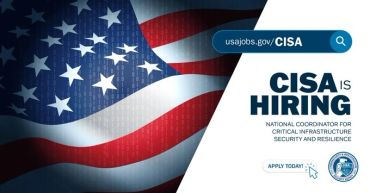
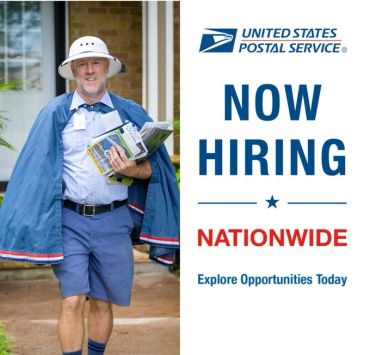
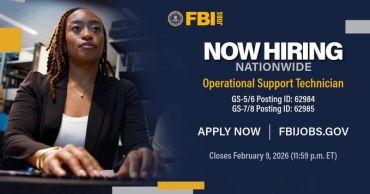
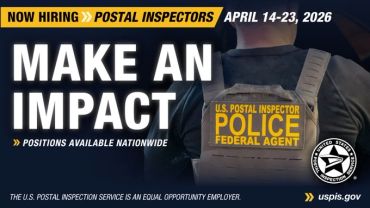
Jobs: companies hiring nationwide
This website uses cookies.
We use cookies to analyze website traffic and optimize your website experience. By accepting our use of cookies, your data will be aggregated with all other user data.